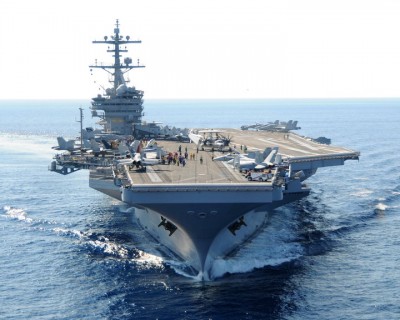
As the drums of war begin to beat once again in Iran, Syria, the South China Sea, and other potential hotspots and flashpoints around the globe, concerned citizens are asking how a world so sick of bloodshed and a population so tired of conflict could be led to this spot once again.
Media
US Journalists and War Crime Guilt
Two months after the Nuremberg hangings, the United Nations General Assembly passed Resolution 59(I), declaring: “Freedom of information requires as an indispensable element the willingness and capacity to employ its privileges without abuse. It requires as a basic discipline the moral obligation to seek the facts without prejudice and to spread knowledge without malicious intent.”
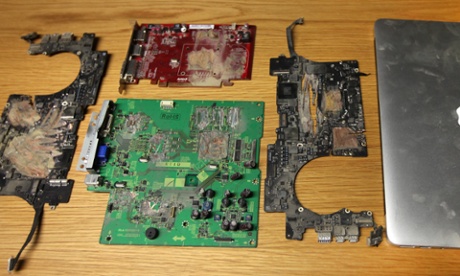
World’s press protests against destruction of Guardian newspaper hard drives and apparent decline in press freedom of UK
In a letter to Mr Cameron, WAN-IFRA, the global organisation of the world’s press, called on the United Kingdom to reaffirm its commitment to press freedom and “respect the rights of journalists to protect their sources and to create the conditions necessary to ensure the press can continue its crucial role in maintaining free and fair societies, without government interference or intimidation”.
Syria – media war beats also out of time with public mood
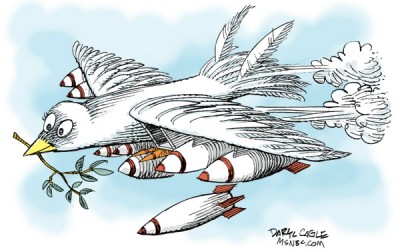
America, Britain and Nato at large cannot help the Syrian or any other war-suffering people. Why? Because Obama, Cameron and their ilk are already part of violent, aggressive states, guilty of vast criminal acts, with no ‘solution’ to offer other than more reckless violence.
UK Media Helps Pave Road to War on Syria
The BBC reported again on Monday 6 May that ‘Western powers have said their own investigations have found evidence that government forces have used chemical weapons’. Again, this is simply not the case. ‘Western powers’, regardless of their true intentions, have in fact been very cautious in public about how precisely they present their claims, underscoring the lack of conclusive evidence they have found and that there exists the possibility that chemical weapons had been used by the Syrian government. This misrepresentation by the BBC emerges in a context in which the use of chemical weapons has been signified by the UK and US as the point at which they may become militarily involved in the Syrian conflict. As such these details, so easily misrepresented by the BBC, are of high consequence.
Which Syrian Chemical Attack Account Is More Credible?
The U.S. government, of course, has a track record that will incline informed observers to approach its claims with skepticism–particularly when it’s making charges about the proscribed weapons of official enemies. Kerry said in his address that “our intelligence community” has been “more than mindful of the Iraq experience”–as should be anyone listening to Kerry’s presentation, because the Iraq experience informs us that secretaries of State can express great confidence about matters that they are completely wrong about, and that U.S. intelligence assessments can be based on distortion of evidence and deliberate suppression of contradictory facts.
The Guardian of What?: The Media and War Propaganda
The Guardian sells itself as the global beacon of liberal opinion. It is liberal on social issues and alongside the chatterers, it has some excellent political correspondents and commentators, notably Gary Younge and Seamas Milne. As liberals themselves, its readers around the world must think they are on safe ground when quoting from the Guardian but if so, where the Middle East is concerned, they are deluding themselves.
Dear Journalists…
The US is about to commit another holocaust in the Middle East based on lies, just like the huge Iraqi WMD lies. Millions of people in the Middle East are in grave risk of being slaughtered. YOU MUST SPEAK UP AND PUT AN END TO THIS CRIMINAL PLOT. Force the American public to think – FOR ONCE!
Massacres That Matter – Part 2 – The Media Response On Egypt, Libya And Syria
Corporate media coverage of atrocities in Egypt, Libya and Syria has closely matched US-UK government interpretations and priorities.
While the US government has refused to describe what was very obviously a military coup in Egypt on July 3 as a coup, many media have also tended to shy away from the term, referring instead to the ‘ousting’ and ‘removal’ of the elected government.
In reporting atrocities in Libya and Syria, the BBC focuses heavily on the word ‘crime’, but described the mass murder in Egypt on August 14 as a ‘tragedy’. Killing in Syria is routinely described as a ‘massacre’, but in Egypt often as the less pejorative ‘crackdown’.
Guardian (again) bleating for war
Instead of outright denunciation of Cameron and his war-salivating ministers, rather than explicit exposure of their mendacious motives, we’re asked to indulge this set of political psychotics, ruminate on Blair’s prior ‘mistakes’ and kowtow to the great charade of ‘parliamentary accountability’.
George Orwell and modern media
The BBC, for example, refers to the armed opposition in Syria as “rebels” – a word which has a subliminal influence on the unsuspecting reader or listener as it implies ‘freedom fighters’. But in Mali, the BBC refers to Islamist fighters there as ‘militants’ which, of course, has a whole different connotation as it conjures up thoughts of extremists and violence.
The reference by the BBC to ‘rebels’ in Syria and ‘militants’ in Mali is not a case of semantics.
Rather, it is, as the foreign diplomat told me over lunch, exactly in line with how the British government sees the conflicts in Syria and Mali – in Syria, a case of freedom fighters versus a dictatorship, and in Mali, a case of al-Qaeda-linked fighters versus the legitimate government of the country.
Massacres That Matter – ‘Responsibility To Protect’ In Egypt, Libya And Syria – Part 1
The ‘responsibility to protect’ (R2P), formulated at the 2005 UN World Summit, is based on the idea that state sovereignty is not a right but a responsibility. Where offending states fail to live up to this responsibility by inflicting genocide, ethnic cleansing and other crimes against humanity on their own people, the international community has a responsibility to act. Economic sanctions and the use of military force can thus be employed as ‘humanitarian intervention’.