The passing of the Monetary and Banking Reform Composite Motion follows many years of campaigning within the party by members concerned about the private creation of money. A group of these campaigners, joined under the banner of the Green Party Monetary Reform Working Group, have been tirelessly working to educate and raise awareness about the private creation of money.
Economy
Exposing the Financial Core of the Transnational Capitalist Class
Deeper inside the transnational capitalist class is what David Rothkopf calls the “superclass.” In his 2008 book, Superclass: The Global Power Elite and the World They Are Making, Rothkopf argued that the superclass constitutes 6,000 to 7,000 people, or 0.0001 percent of the world’s population.12 They are the Davos-attending, Gulfstream/private jet–flying, money-incrusted, megacorporation-interlocked, policy-building elites of the world, people at the absolute peak of the global power pyramid. They are 94 percent male, predominantly white, and mostly from North America and Europe.
Wales needs to consider following the successful public banking model of North Dakota
What is certain is that the issue of public banking should be brought into the debate on the Welsh economy, as to ignore it would be to exclude a potentially democratising and sustainable banking system from the national conversation.
Public Banking for Wales, Ireland and Scotland: Promise and Possibilities
Dr. Ian Jenkins of Arian Cymru (Money Wales) has written two excellent articles on why Wales should have its own bank and how that might be accomplished. The shorter article is reprinted below, and the longer, more technical article is linked here.
Larry Summers and the Secret “End-Game” Memo
The Memo confirmed every conspiracy freak’s fantasy: that in the late 1990s, the top US Treasury officials secretly conspired with a small cabal of banker big-shots to rip apart financial regulation across the planet. When you see 26.3% unemployment in Spain, desperation and hunger in Greece, riots in Indonesia and Detroit in bankruptcy, go back to this End Game memo, the genesis of the blood and tears.
Making the World Safe for Banksters: Syria in the Cross-hairs
Countries laboring under the yoke of an extractive private banking system are being forced into “structural adjustment” and austerity by their unrepayable debt. But some countries have managed to escape. In the Middle East, these are the targeted “rogue nations.” Their state-owned banks can issue the credit of the state on behalf of the state, leveraging public funds for public use without paying a massive tribute to private middlemen. Generous state funding allows them to provide generously for their people.
Ever Wondered Why There’s So Much Debt?
Personal debt is at its highest level in history. We currently pay £192 million in interest to the banks every single day. Almost no-one under 40 years old can afford to buy a house. Over 2 million people are unable to find work in the UK, and millions more worldwide…
But the government’s ‘answer’ to this crisis is to get people to borrow even more!
The Proof That Banks Create Money
More than 97% of all the money that exists is created by banks when they make loans. When people first hear this, they often find it hard to believe. But we don’t want you to take our word for it, read these quotes to hear what central bankers, finance journalists, and commentators have to say on the subject.
Money Is Not Safe In The Big Banks
People think that money is safe in the big banks because the FDIC will protect the deposits. This assumption is not based on the facts. This video will show official government documents that describe the plans for confiscating deposits when, (not if) a big bank fails. Individual, as well as public funds from municipal, university, county deposits are at serious risk. YOUR taxpayer money will disappear in the next crisis! Public officials in charge of taxpayer funds need to be aware of the dangers here. The loss of taxpayer funds and the inability to meet payrolls and obligations will certainly prompt a response that will both immediate and forceful.
The Leveraged Buyout of America
Using these excess deposits directly for their own speculative trading would be blatantly illegal, but the banks have been able to avoid the appearance of impropriety by borrowing from the repo market. (See my earlier article here.) The banks’ excess deposits are first used to purchase Treasury bonds, agency securities, and other highly liquid, “safe” securities. These liquid assets are then pledged as collateral in repo transactions, allowing the banks to get “clean” cash to invest as they please. They can channel this laundered money into risky assets such as derivatives, corporate bonds, and equities (stock).
The End of Growth
Our economy is based on a model of constant growth – growth in production, consumption and population. Economic growth has provided rising standards of living in the West and seen millions in China and India lifted out of poverty. This model has been disrupted in many countries by the global financial crisis, which is now seeing another round of casualties, particularly in Europe. Will things settle down with growth resuming, or will our economies bump up against a wall of finite resources? And if they do, what will this mean the global balance of power?
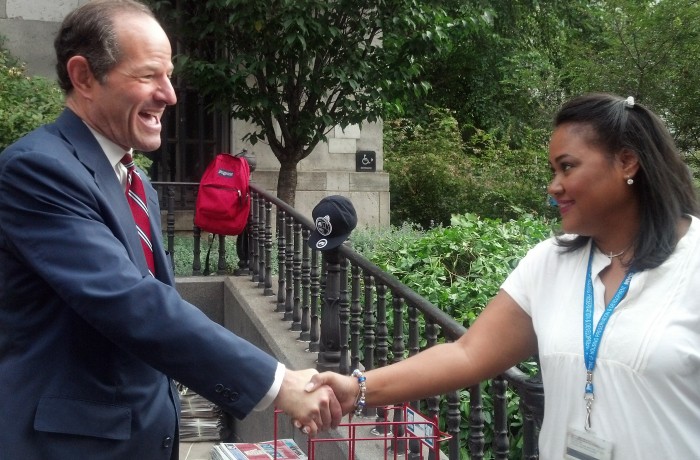
Not Too Big to Jail: Why Eliot Spitzer is Wall Street’s Worst Nightmare
In a December 2011 article in Slate titled “We Own Wall Street,” Spitzer argued that bad corporate behavior could be stopped by a political movement uniting shareholders, pension funds and mutual funds – the actual owners of the corporations – who could then take coordinated action to demand transparency and accountability.