Economy

Food Riots: The New Normal?

Reduced land productivity, combined with elevated oil costs and population growth, threaten a systemic, global food crisis. Citing findings from a study by Paul and Anne Ehrlich, published by the Royal Society, Nafeez Mosaddeq Ahmed identified the links among intensifying economic inequality, debt, climate change, and fossil fuel dependency to conclude that a global food crisis is now “undeniable.”


Boots’ billion pound tax dodge

New research shows that Alliance Boots, the high street chemist and pharmaceutical giant, has avoided more than £1 billion in tax since it went private six years ago through taking on excessive debts, profit shifting and corporate restructuring. This report, Alliance Boots & The Tax Gap, published by War on Want, Unite the Union and Change 2 Win, exposes the full scale of Boots’ tax avoidance for the first time.

Debt Ceiling: China Calls for World to Be ‘De-Americanised’

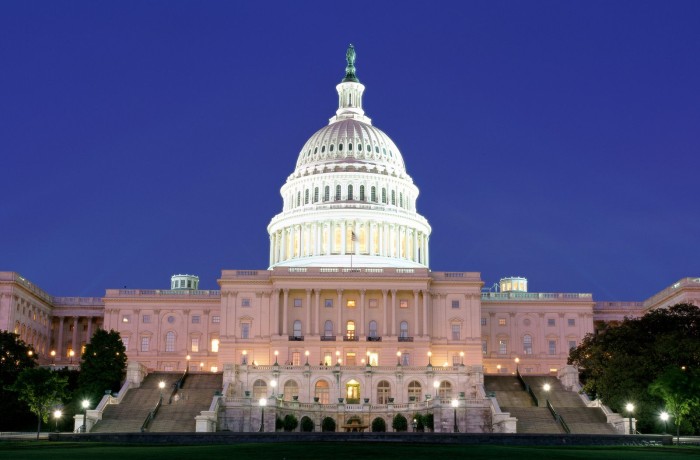
China’s official news agency has called for the creation of a “de-Americanised world”, saying the destinies of people should not be left in the hands of a hypocritical nation with a dysfunctional government.

Heaping criticism and caustic ridicule on Washington, the Xinhua news agency called the US a civilian slayer, prisoner torturer and meddler in others’ affairs, and said the ‘Pax Americana’ was a failure on all fronts.

Jobcentre Misleading Claimants on Universal Jobmatch

Universal Jobmatch, the DWP’s job search website that became ‘mandatory’ for those claiming unemployment benefit on March 1st 2013, has been dogged by controversy amid claims it is simply a tool for keeping tabs on jobseekers rather than an effective aid to help them find work.
Websites like The Void and Consent Me have done sterling work exposing this and other government scams, like Workfare, designed to shame and exploit the victims of its economic criminality.

The Nightmare Scenario: A Repo Implosion

Repo is at the heart of the shadow banking system, that opaque off-balance sheet underworld where maturity transformation and other risky banking activities take place beyond the watchful eye of government regulators. It is where banks exchange collateralized securities for short-term loans from investors, mainly large financial institutions. The banks use these loans to fund their other investments boosting their leverage many times over to maximize their profits.

The Forsemen

FOUR HORSEMEN is free from mainstream media propaganda — the film doesn’t bash bankers, criticise politicians or get involved in conspiracy theories. It ignites the debate about how to usher a new economic paradigm into the world which would dramatically improve the quality of life for billions.

The Madness of Never-Ending Economic Growth

Countries’ economies are driven by an obsession, continuous growth in the country’s Gross Domestic Product (GDP). The absurdity of this becomes clear with a little bit of thought. Never-ending growth that relies on extracting resources from a finite planet is, of course, a mathematical impossibility, but well before we reach that point, this obsession will render our planet uninhabitable.

Derivatives and the Government Shutdown: Wall Street Bets One Thousand Trillion Dollars of Everybody Else’s Money

The casino has swallowed the system. The sums the players are betting are not only far larger than the value of the rest of their portfolios, but six times larger than the combined assets of every human institution and family on Earth, and almost 17 times bigger than the worth of humankind’s yearly output. Even if the whole planet were offered as collateral, it could not cover Wall Street’s bets.

New Worries Over Confiscating Bank Accounts

A “bail-in” is a relatively new term being used increasingly in international finance to refer to a situation in which private assets, including private bank deposits, are confiscated by government institutions to compensate for shortfalls. The bail-ins are used to address problems ranging from inadequacies in financial institution reserves to situations in which a government needs to reduce debt ratios to resume borrowing.