False Flag Terrorism

Fact-Free Zone

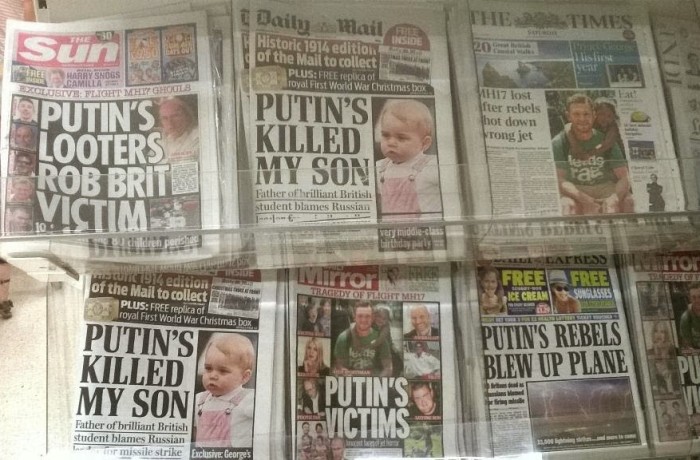
The real crime is in exploiting this tragedy in order to smear and insult an entire people. Don’t worry, the people in question are too wise to respond to such ridiculous provocations. But the reputations of western journalists who have been covering this tragic event have already gone up in smoke. All of western media is now about as good as Pravda was back in the Soviet days—good for wiping your ass with, that is. It’s a sad day for anyone who cares about the truth but can only understand English.

What Did US Spy Satellites See in Ukraine?

In the recent past, this sort of sloppy American journalism has led to mass slaughters in Iraq – and has contributed to near U.S. wars on Syria and Iran – but now the stakes are much higher. As much fun as it is to heap contempt on a variety of “designated villains,” such as Saddam Hussein, Bashar al-Assad, Ali Khamenei and now Vladimir Putin, this sort of recklessness is careening the world toward a very dangerous moment, conceivably its last.

10 more questions Russian military pose to Ukraine, US over MH17 crash

The USA, putting the blame on the self-defense forces, has yet refused to release any intelligence material. On Monday State Department Deputy Spokesperson Marie Harf described Russia’s statements as “propaganda and misinformation” – but when reporters asked her whether Washington would be releasing their intelligence and satellite data, Harf only replied “may be.” So far the US has been backing its statements by social media and “common sense.”

Cui Bono? Flight MH17 Down Over Ukraine

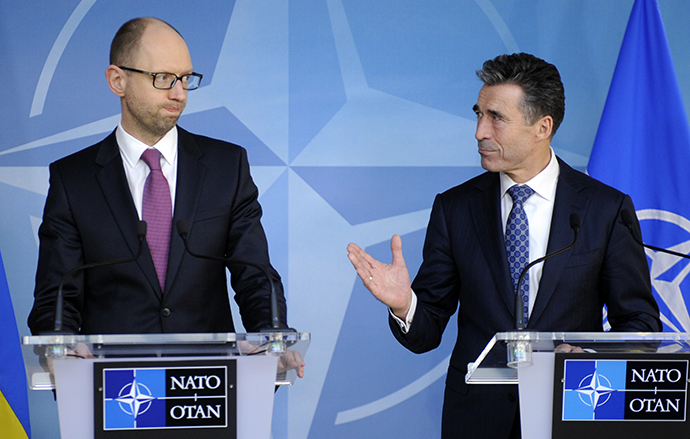
The impetus necessary to unite Europe and other Western allies behind NATO and the US for a more direct intervention in Ukraine where the West is currently floundering is now consuming headlines around the world. If the downing of MH17 was not a case of tragic misidentification, then answering the first question of any investigation, cui bono – or to whose benefit – is answered resoundingly with, “NATO.”

Pity the Children

For the United States, the wars in Iraq and Afghanistan will be over soon. We will leave behind, after our defeats, wreckage and death, the contagion of violence and hatred, unending grief, and millions of children who were brutalized and robbed of their childhood. Americans who did not suffer will forget. People maimed physically or psychologically by the violence, especially the Iraqi and Afghan children, will never escape. Time and memory will play their usual tricks. Those who endured war will begin to wonder, years from now, what was real and what was not. And those who did not taste of war’s noxious poison will stop wondering at all.

“Lessons from Libya: How Not to Intervene”

NATO’s action magnified the conflict’s duration about sixfold and its death toll at least sevenfold, while also exacerbating human rights abuses, humanitarian suffering, Islamic radicalism, and weapons proliferation in Libya and its neighbors. If Libya was a “model intervention,” then it was a model of failure.

Leaving the USS Liberty Crew Behind

Justifying the swap of Taliban prisoners for Sgt. Bergdahl, President Obama cited a principle of never leaving U.S. soldiers behind, but that rule was violated in the shabby treatment of the USS Liberty crew, attacked 47 years ago by Israeli warplanes, writes ex-CIA analyst Ray McGovern.

Dead In The Water

“By way of deception thou shall do war”

Israel claimed that the whole affair had been a tragic accident based on mistaken identification of the ship. The American government accepted the explanation.

For more than 30 years many people have disbelieved the official explanation but have been unable to rebut it convincingly. Now, Dead in the Water uses startling new evidence to reveal the truth behind the seemingly inexplicable attack. The film combines dramatic reconstruction of the events, with new access to former officers in the US and Israeli armed forces and intelligence services who have decided to give their own version of events.

A world war between classes, not countries

While powerful beneficiaries of war and military spending – major banks (as primary lenders to governments) and the military-security-industrial complex – thrive on war and international tensions, they nonetheless tend to prefer local, national, limited, or “manageable” wars to large scale regional or global wars that, in a cataclysmic fashion, could paralyze global markets altogether.

This goes some way to explain why in pursuit of regime change in Iraq and Libya, for example, the United States and its allies relied on direct military action/occupation; whereas in cases like Ukraine and Iran they have (so far) avoided direct military intervention and relied, instead, on “soft-power” tactics and color-coded revolutions.

The Syrian People Have Spoken

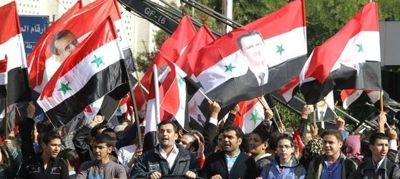
The Syrian presidential election surprised both Syrians and their allies and enemies. The poll, which everyone agrees was legitimate, mobilized 73.42% of the electorate, despite the inability of some people to get to the polls because of the occupation of part of the country by foreign mercenaries. Bashar al-Assad won 88.7% of the vote and his mandate has been extended for 7 more years.

Premature US Victory-Dancing on Ukraine

The post-coup election of a pro-Western politician as president of Ukraine – and the escalating slaughter of lightly armed anti-coup rebels in the east – have created a celebratory mood in Official Washington, but the victory dance may be premature, says ex-CIA analyst Ray McGovern.