The injunction to Rest in Peace is rarely more appropriate than it is for Gerry Conlon, but the restless, righteous anger of this good, gentle man will be terribly missed.


The injunction to Rest in Peace is rarely more appropriate than it is for Gerry Conlon, but the restless, righteous anger of this good, gentle man will be terribly missed.

While powerful beneficiaries of war and military spending – major banks (as primary lenders to governments) and the military-security-industrial complex – thrive on war and international tensions, they nonetheless tend to prefer local, national, limited, or “manageable” wars to large scale regional or global wars that, in a cataclysmic fashion, could paralyze global markets altogether.
This goes some way to explain why in pursuit of regime change in Iraq and Libya, for example, the United States and its allies relied on direct military action/occupation; whereas in cases like Ukraine and Iran they have (so far) avoided direct military intervention and relied, instead, on “soft-power” tactics and color-coded revolutions.
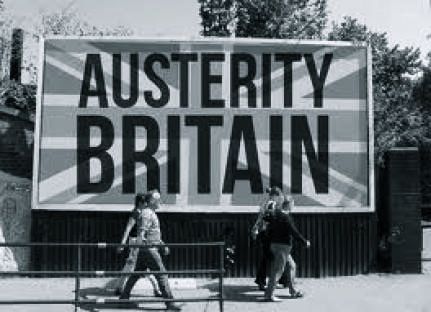
It is astonishing that this pernicious web of lies has been spun largely unchallenged; that the construction of this vast edifice of fabrication has been permitted. Yet the powerful mythology surrounding benefits comes tumbling down with the slightest pressure; crumbles at the gentlest application of logic or rationality, shatters and splinters on exposure to mere facts.
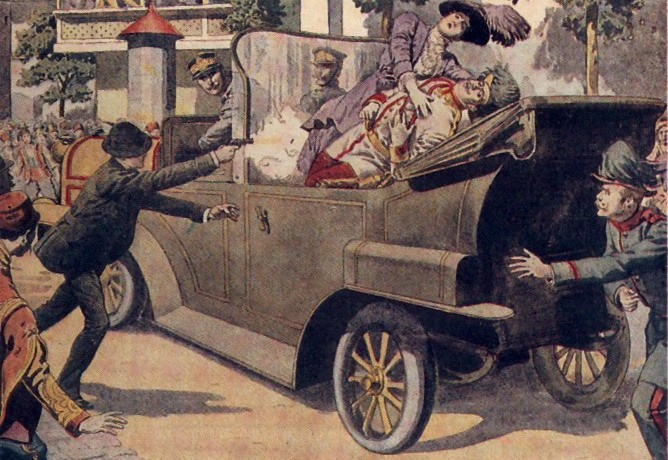
We cannot here in Sarajevo make a common peace programme, but we can commit to a common goal. If our common dream is a world without weapons and militarism, why don’t we say so? Why be silent about it? It would make a world of difference if we refused to be ambivalent about the violence of militarism. We should no longer be making scattered attempts to modify the military, each one of us would do our thing as part of a global effort. Across all divisions of national borders, religions, races. We must be an alternative, insisting on an end to militarism and violence. This would give us an entirely different chance to be listened to and taken seriously. We must be an alternative insisting on an end to militarism and violence.

The Blood Never Dried was written very much as a response to British participation in the Iraq war and although British troops have been withdrawn from that country, at the time of writing they remain in Afghanistan. Only recently British aircraft have been employed to bomb Libya, the country that has the dubious honor of being the first country to ever experience aerial bombardment, at the hands of the Italians, in 1911. Indeed, the aerial bombardment of 2011, in which the Italians participated, was an unwitting marking of that anniversary. And there are colonial wars still to come which our rulers will dress up as humanitarian interventions or as reluctant responses to “mortal threats” posed by a variety of “enemies,” yesterday Communists, today Islamists, tomorrow….

Kiev has admitted showering the eastern Ukrainian city of Lugansk with dozens of missiles from the air, saying that its Air Force helicopters and jets “fired more than 150 missiles” in Monday’s military action.
DEATH TOLL: 181 people killed, 293 injured in Kiev military op

The escalating protests in Brazil are symptomatic of the wealth disparities between the ruling class and the masses. More than just food baskets, Brazilian people demand social justice and are up in arms over the lavish spending on the 2014 football World Cup.

Only when Mark Carney, Christine Lagarde and Prince Charles start talking about the abolition of privately created debt-based money should we even begin to take them seriously. Of course such an affront to the obscenely wealthy would have seen even Prince Charles ejected from the Mansion House soiree.

Statements of the bleeding obvious, the outcomes of basic arithmetic, are treated as exotic and unpardonable distractions, while the impossible proposition by which we live is regarded as so sane and normal and unremarkable that it isn’t worthy of mention. That’s how you measure the depth of this problem: by our inability even to discuss it.

“Where liberty is, there is my country,” Benjamin Franklin once said to Paine. “Where liberty is not, there is my country,” Paine replied. For Paine, the role of a citizen extended beyond national borders. The fight of those living under any system of tyranny was his fight. “When it shall be said in any country in the world ‘My poor are happy; neither ignorance nor distress is to be found among them; my jails are empty of prisoners, my streets of beggars; the aged are not in want, the taxes are not oppressive; the rational world is my friend, because I am a friend of happiness’: when these things can be said,” Paine wrote, “then may that country boast of its constitution and its government.”

And, here’s the corker: No one gives a rip. Face it: No one gives a flying fuck about Iraq. The American people lost interest long ago, the politicians can’t be bothered, and the UN is too afraid of the US to lift a finger to help. They’d rather stamp their feet and scold Putin over Crimea than utter a peep about the genocide in Iraq. That’s the state of things today, right? No accountability for the men who started the war, and no justice for the victims.
A million people were killed so a few rich fuckers could get even richer. That’s a hell of a legacy.

When a sexually assaulted American citizen can be falsely arrested for assaulting a police officer, brought to trial by a corrupt prosecutor whose false case is endorsed by a corrupt judge and convicted by an insouciant jury, you know that justice is dead in America.
The death of Justice is a huge problem. The US not only has the largest percentage of its population in prison of every country in the world, the US also has the largest absolute number of prison inmates, larger even than “authoritarian” China which has a population four times larger than the US. In China, despite Washington’s endless lies about “human rights abuses,” a citizen has a far lower chance of imprisonment than does a “freedom and democracy” American.


